Compare Quarterzip and Pendo. See how proactive AI activation agents stack up against tooltip-based in-app guides that require developer resources.



Quarterzip is built for the new shape of the problem. A voice agent reads the live UI, talks to the user while it watches their screen, and walks them through new capability in the context of their actual work.
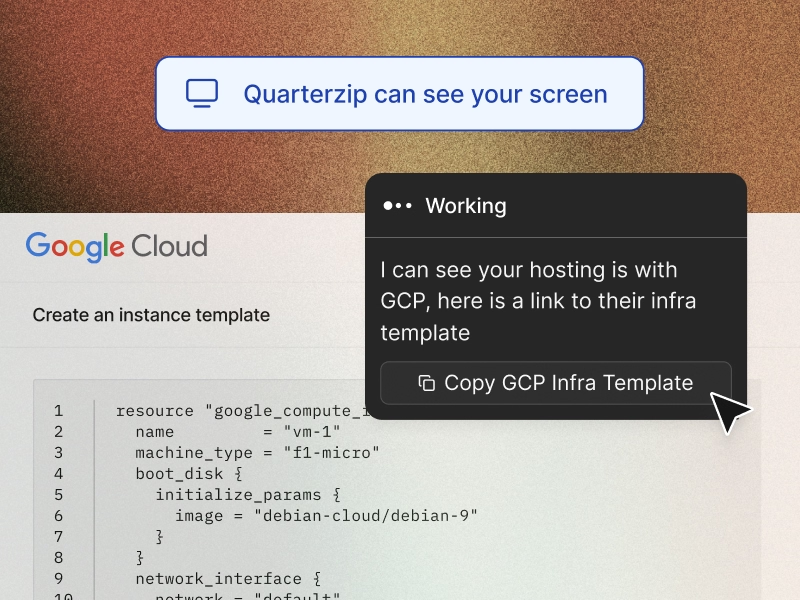
Proactive voice guidance
The agent talks to the customer in natural language while watching their screen, which means it can hear that someone is stuck, ask why, and change tack. A tooltip is one message in one direction with no way to know whether it landed.
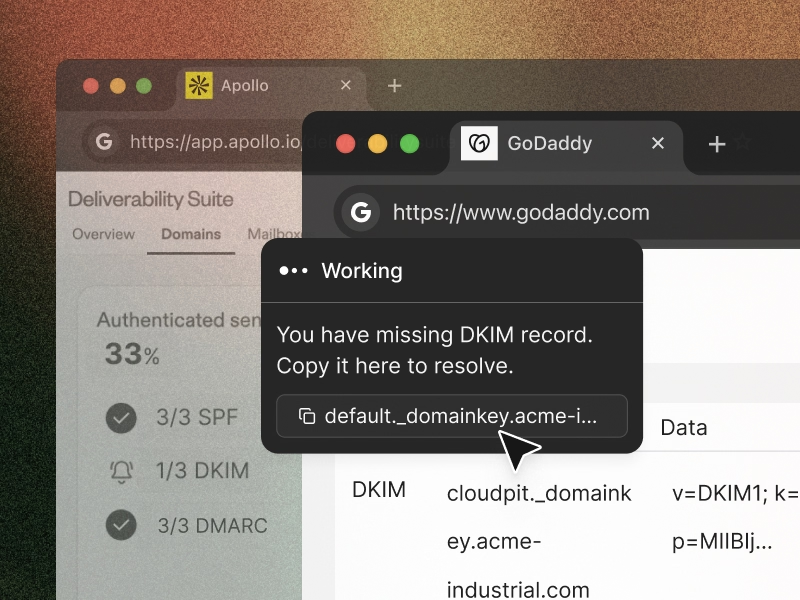
Cross-app from the start
Customers don't activate inside one product. They move between their CRM, your product, a spreadsheet, and another tab in the same session. The agent moves with them. Pendo only sees what happens inside the app when its SDK is installed.
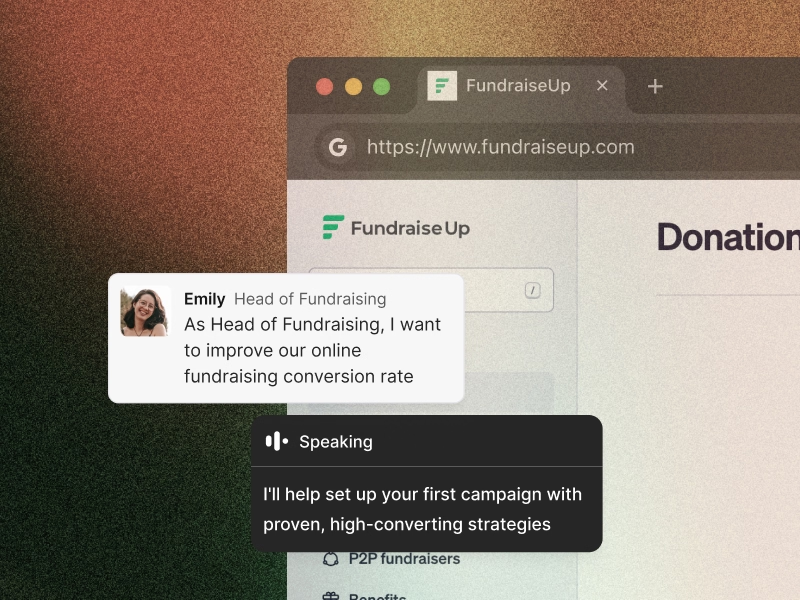
Built for the features customers don't know how to use yet
Pendo's guides work well when activation is a sequence of clicks the customer needs help finding. New features, AI features in particular, aren't usually like that. They look like a customer telling the system what they want and letting it do work they used to do themselves, which means activation is a conversation about goals and trust, not a sequence of clicks.
FAQs
Is Quarterzip a Pendo solution?
The two products overlap in goal but differ in approach and in what they're built to activate. Pendo is a product analytics and in-app guidance platform built around tooltips, walkthroughs, and event data. Quarterzip is a voice and screenshare agent that talks to customers, watches their screen, and guides them across any tool. Some teams use both. Others replace Pendo when their primary problem is activating new features rather than analysing existing usage.
Does Quarterzip require engineering resources?
There's no JavaScript snippet, no code to add. Quarterzip is done-for-you and the agent runs against your live UI through computer vision. Most customers are live within two weeks.
Can Quarterzip work across multiple applications?
Yes. The agent follows the user across browser tabs and into third-party tools like CRMs, spreadsheets, and adjacent products, without an SDK in each one. WalkMe also supports cross-application coverage, but each application requires its own implementation and ongoing maintenance.
How is Quarterzip different from Pendo Guides?
Pendo Guides are static tooltips and walkthroughs triggered by predefined events. Quarterzip is a real-time conversation where the agent asks the customer what they're trying to do and walks them through it, not only showing them the product but how to improve their workflows. 80% of tooltip flows are abandoned before the final step, and most of the 20% that finish get clicked through without being read, which is part of why the conversational approach produces different results.