Compare Quarterzip and WalkMe. See why the activation layer for AI diffusion sits in a different category from enterprise digital adoption platforms.



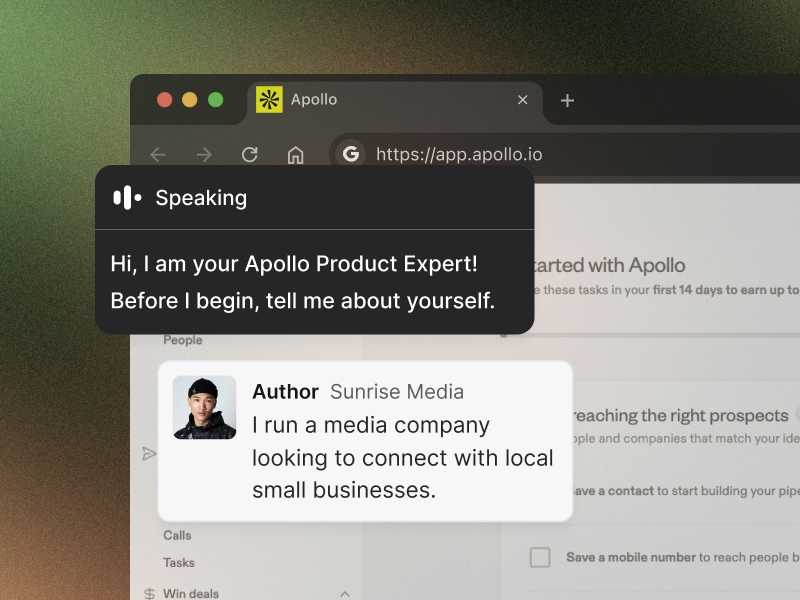
Quarterzip is built for the new shape of the problem. A voice agent reads the live UI, talks to the user while it watches their screen, and walks them through new capability in the context of their actual work.
Built for diffusion, not adoption governance
WalkMe is built to govern software adoption across an enterprise stack. It’s IT-led, instrumented per application, measured by application engagement. Quarterzip is built for the rate at which new capability reaches the people who are supposed to use it.

Live in two weeks, not two quarters
WalkMe deployments are enterprise software rollouts measured in quarters. Quarterzip is done-for-you and goes live in two weeks. The team that needs to activate users doesn't have a year to wait for an implementation cycle to stand up, and the rate at which new capability is shipping doesn't accommodate that timeline anyway.
Adapts to product changes
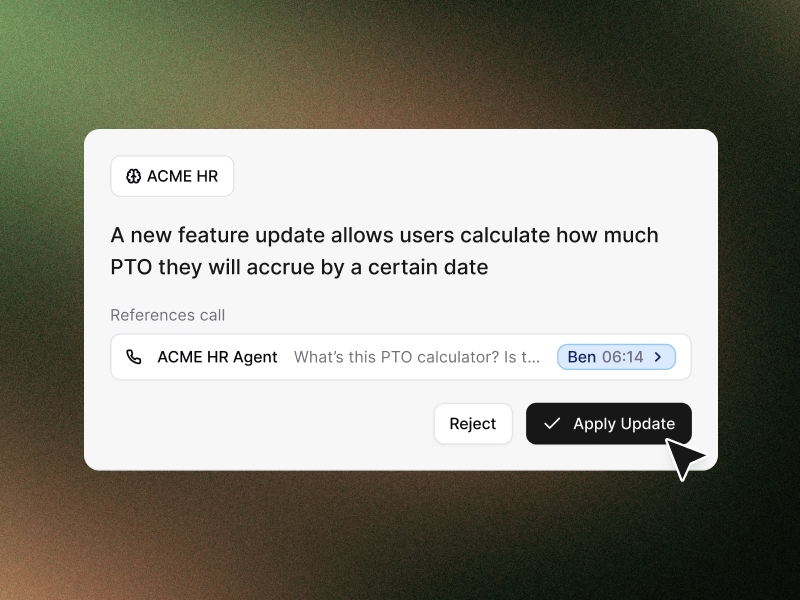
Quarterzip reads the live UI , so it sees the product as it currently is. When the product changes, the agent adapts without anyone re-scripting the flows. WalkMe's flows are scripted against specific in-app elements, so product changes typically require the implementation team to update the affected walkthroughs and tooltips.
Voice and screenshare, not tooltips and chat
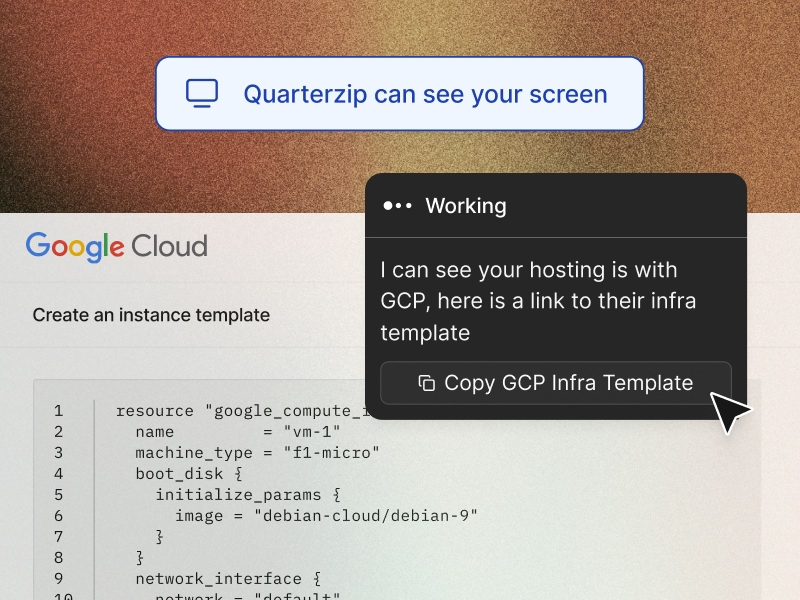
WalkMe's interface is the same model the DAP category has run on for years where text-based guidance triggered by in-app events, with a chatbot for users who go looking for help. Quarterzip is a voice conversation while the agent watches the user's screen.
FAQs
Is Quarterzip a WalkMe alternative?
Not strictly. The two products share a goal at the surface, getting people to use software, but they sit in different categories. WalkMe is a digital adoption platform built to govern application usage across an enterprise stack. Quarterzip is the activation layer for AI diffusion: a voice agent that reads the live UI, talks to the user, and activates new capability as it ships. Teams sometimes evaluate both because the search collides them, but the question each one answers is different.
How is Quarterzip not a DAP?
DAPs were built around code-injected, in-application guidance for stable software environments. The problem they solve is real but it's a different problem from the one Quarterzip is built for. AI features ship faster than DAPs can be re-scripted, the user-facing surface of products is changing constantly, and the question users have about new capability isn't navigational, it's about goals and trust. Quarterzip is built for that question, with an interface and a deployment model that the DAP category isn't structured to deliver.
Can Quarterzip work across multiple applications?
Yes. The agent follows the user across browser tabs and into third-party tools like CRMs, spreadsheets, and adjacent products, without an SDK in each one. WalkMe also supports cross-application coverage, but each application requires its own implementation and ongoing maintenance.
What happens when the product changes?
Quarterzip's agent reads the live UI, which means it sees the product as it currently is. When the product changes, the agent adapts without anyone re-scripting the flows. WalkMe's flows are scripted against specific in-app elements, so product changes typically require the implementation team to update affected walkthroughs and tooltips.