Customer Activation Strategy: A Framework for Growth


Introduction
Most leadership teams have growth in the wrong place.
When companies talk about growth, they almost always mean acquisition. More leads, more pipeline, more demos booked. The growth team sits inside marketing or sales, and once a deal closes the activation problem gets pushed downstream to product or customer success. Growth is something the front of the business does. Activation is something the back of the business cleans up.
The honest read is that this is backwards. Growth doesn't happen at the top of the funnel. It happens at activation, and the team that owns it is product.
The reason is simple. Customers who activate deeply and adopt the product quickly turn into the loudest champions a company has in market. They're the reason the next deal closes. Word of mouth is the highest-quality channel that exists, and it doesn't come from the leads who never logged in. It comes from the customers who got to value, told someone, and meant it.
This guide is about how to build a customer activation strategy that produces those customers. It walks through what an activation strategy actually is, why mapping value to actions is the thing that decides whether the strategy works, and what it looks like to scale activation without quietly destroying the CS budget.
Why growth happens at activation, not acquisition
The SaaS businesses pulling away from their categories aren't the ones spending the most on acquisition. They're the ones whose customers turn into a distribution channel.
When someone activates properly, three things happen at once. They renew, because the product is genuinely doing something for them. They expand, because they keep finding more places it can help. And they talk about it, because people who get value from a tool tell other people about it. That third one takes a year or two to show up on a pipeline dashboard, which is why most growth teams undervalue it, but it's the one that compounds.
The reason product owns this is almost geographic. The moment that decides whether a customer becomes a long-term customer or a churn risk in nine months is the moment they sit down with the product and either find the value or don't. That moment lives inside the product.
The CRO funds the work and reports the number. CS feeds in what they're hearing from customers, but the strategy itself sits with the people closest to the product for it to work.
Pull quote: Estimates put activation debt, revenue paid for products customers never reached value in, at around $537M annually.
The leaking funnel
Here's a number worth sitting with for a minute. Roughly 30% of users who sign up to products actually activate. 95% of them never speak to a human while doing it. So three out of every four customers the acquisition team paid to bring in are gone before they ever became customers, and almost none of them gave anyone a chance to help.
If a funnel leaks like that, widening the top doesn't fix it. It makes it more expensive and every dollar spent acquiring customers an unactivated product can't keep is a dollar funding the same loss the last cohort took.
The thing that's harder to see, and more painful when it lands, is that you can't really monetise a customer who didn't activate.
Estimates put activation debt, revenue paid for products customers never reached value in, at around $537M annually. The real number is probably bigger. It compounds quietly until renewal, and by the time finance asks why net revenue retention is flat, the answer is buried six months upstream in an activation flow nobody owned.
The companies fixing this aren't running bigger acquisition budgets. They're rebuilding the funnel so it stops leaking.
The activation strategy framework
A customer activation strategy isn't a checklist. The better way to think about it: four pieces of work that connect what the product does to what the business earns.
StepWhat it doesOwner1. Define the activation momentThe specific behaviour that separates retained customers from churned onesCRO + Product2. Map business value to every actionEvery step in the journey explicitly tied to the value the customer gets from completing itCRO + CS3. Measure activation depth, not just activation rateTrack how many parts of the product an activated customer is actually usingRevenue ops4. Scale activation without scaling the teamMove standard activation paths off CSM calendars and into the activation layerCRO + CS
The rest of this guide covers steps 2, 3, and 4. Step 1 is covered in What Is Customer Activation? The Complete Guide for SaaS.
Mapping business value to customer actions
This is the operator moment that makes or breaks the rest of the strategy.
Customers will do hard things. They'll connect integrations, import their data, bring their team in and change a workflow they've used for five years. But to motivate the effort, they need to understand the business value waiting on the other side of the work.
What they won't do is click through a tour because the product told them to.
The single biggest design decision in an activation strategy is whether every action in the flow is mapped to a value the customer can name. "Connect your CRM" is a step in a setup checklist. "Connect your CRM so we can flag the deals stalling in your pipeline this week" is a value-mapped action. Same work for the customer but results in a completely different completion rate.
How to audit your own flow
Walk every step of your current activation journey and ask yourself does each step result in value for the end user.
Customers don't owe a product setup time post investing. The product has to earn it by paying off something visible.
The flows that work are the ones where every action is anchored to a number, an outcome, or a problem the customer came to solve. The flows that don't work are the ones where the value is implied, assumed, or saved for the end.
Why this is the operator moment
A lot of activation strategies have the opposite instinct. Teams build frictionless onboarding that strips substance out, on the theory that easier is always better to end up with users who completed a flow but never saw the product do anything that mattered.
The better read is closer to the opposite. Customers will tolerate more friction, not less, when the friction is paying off something they want. Get this part right and the rest of the strategy works. Get it wrong and no amount of acquisition spend, CSM headcount, or onboarding software will fix it.
Track activation depth
Activation depth measures how many of your product's core feature areas a customer touches before activating. Single-feature activators are at much higher churn risk than customers who activate against the product as a system. The depth number tells you which.
Three things follow from tracking depth.
What you can doWhy it mattersSegment at-risk users earlierA customer activated against one feature has different needs from one activated across threePredict expansion, not just retentionDepth at activation correlates with eventual expansion revenue more reliably than any other early signalAudit your activation journey for value mapping gapsA drop in depth usually means a value-mapping failure further up the flow
The teams reporting "activation rate up" while net revenue retention stays flat are usually measuring shallow activations. The depth number catches that gap before the renewal cycle does.
Scaling activation without scaling the team
The default answer to scale headcount to keep up with customer growth. It works, for a while. But then the unit economics catch up, because every CSM is linear cost on a function that needs to scale faster than headcount can keep up with.
The deeper problem is that hiring more CSMs accepts an assumption that activation requires human time on every account. The companies pulling away on activation aren't running bigger CS teams. They're running an activation layer that handles the standard paths automatically, and using their CS team for the work that actually needs a person.
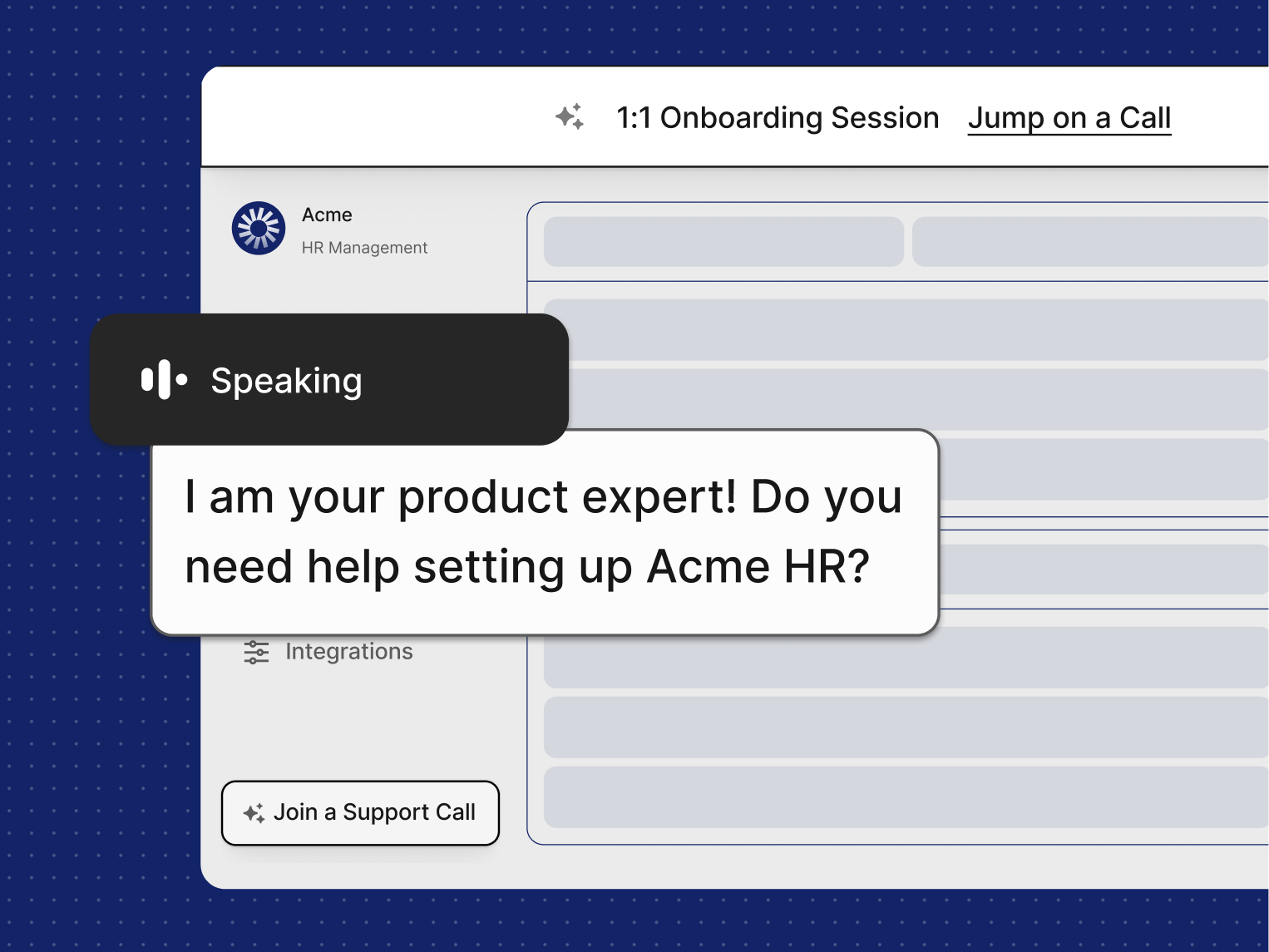
The activation layer sits between sign-up and value realisation. It runs proactive guidance in real time, across the product the customer is using, without waiting for the customer to put their hand up.
FirstAML used to onboard 850 practices the way most SaaS companies do, with CSMs running the same calls, the same walkthroughs, the same setup conversations on repeat. After deploying a Quarterzip powered activation layer to handle the standard paths, onboarding time dropped 70%. The CS team kept the work that needed a person and lost the work that didn't.
Key takeaway
The whole game is whether customers can see the value at every step of the activation flow. If they can, they'll do hard things to get to it. If they can't, you're running an expensive acquisition engine into a leaking funnel and hoping headcount makes up the difference.
Conclusion
The customers already paid for are worth more than the next ten about to be spent on, and whether that value is ever realised depends on whether they activate. Acquisition gets you the trial. Activation gets you the customer. The rest is what those customers do for the business when they're talking to someone else.
Next step: To see what an activation layer looks like running inside a real revenue team, book a Quarterzip demo.