Why doing nothing about AI diffusion is an expensive bet on your roadmap



When electricity first became commercially viable in the 1880s, it reached a small number of factories within the first decade and then more or less stopped spreading. The capability worked, generators were real. Edison and Tesla were arguing publicly about which standard should win, and the debate generated headlines well outside the technical press.
But for the next thirty years or so, electrification largely stayed inside the operations that had bought into it early. Steam still powered most of the rest of the economy, and electricity was treated as a specialist technology rather than for general purpose.
The reason wasn't a problem with the underlying technology. The reason was that you couldn't use electricity without an electrical engineer on staff. The interfaces that would make electricity usable for someone who wasn't an engineer, such as the plug, hadn't been built yet. So electricity sat where it already was, used by the operations that could afford to staff around the problem.
During that thirty-year wait, the factories that had electrified didn't just produce more efficiently than the ones that hadn't. They restructured their operations around the new capability, opened up product categories that hadn't existed before, captured markets the slower movers couldn't compete in, and ended up reshaping their industries from the inside.
By the time electricity started reaching everyone else in the 1910s and 1920s, the gap between the early movers and the laggards had become structural rather than temporary. The companies that waited didn't catch up so much as get bypassed.
When Westinghouse built the plug
The thing that ended the thirty-year wait wasn't Edison or Tesla improving the underlying technology. They had been improving it the whole time. What changed was that Westinghouse and the manufacturers who came after him built the interfaces that made electricity usable by people who weren't engineers.
A plug a person could put into a wall. A switch a person could flip without knowing anything about voltage. An appliance a person could buy, plug in, and use immediately. Each one of those interfaces took something that had previously required specialist knowledge and made it accessible to anyone who could afford the device.
Once those interfaces existed, electricity diffuse fast. Within a generation it reached every shop, every classroom, every home. The productivity benefit that had been concentrated in a small number of operations became universal, and the technology that had been niche for thirty years became infrastructure for the next hundred. The interface was what made that happen.
AI is in the same position right now
If you take the electricity story and overlay it on where AI is in 2026, the dynamics are almost identical. The capability is real and improving rapidly. The labs are doing the equivalent of what Edison and Tesla were doing in the 1890s, pushing the underlying technology forward at serious pace. The productivity benefit, however, has stayed concentrated in a small group of users, primarily software developers and a narrow band of technical knowledge workers.
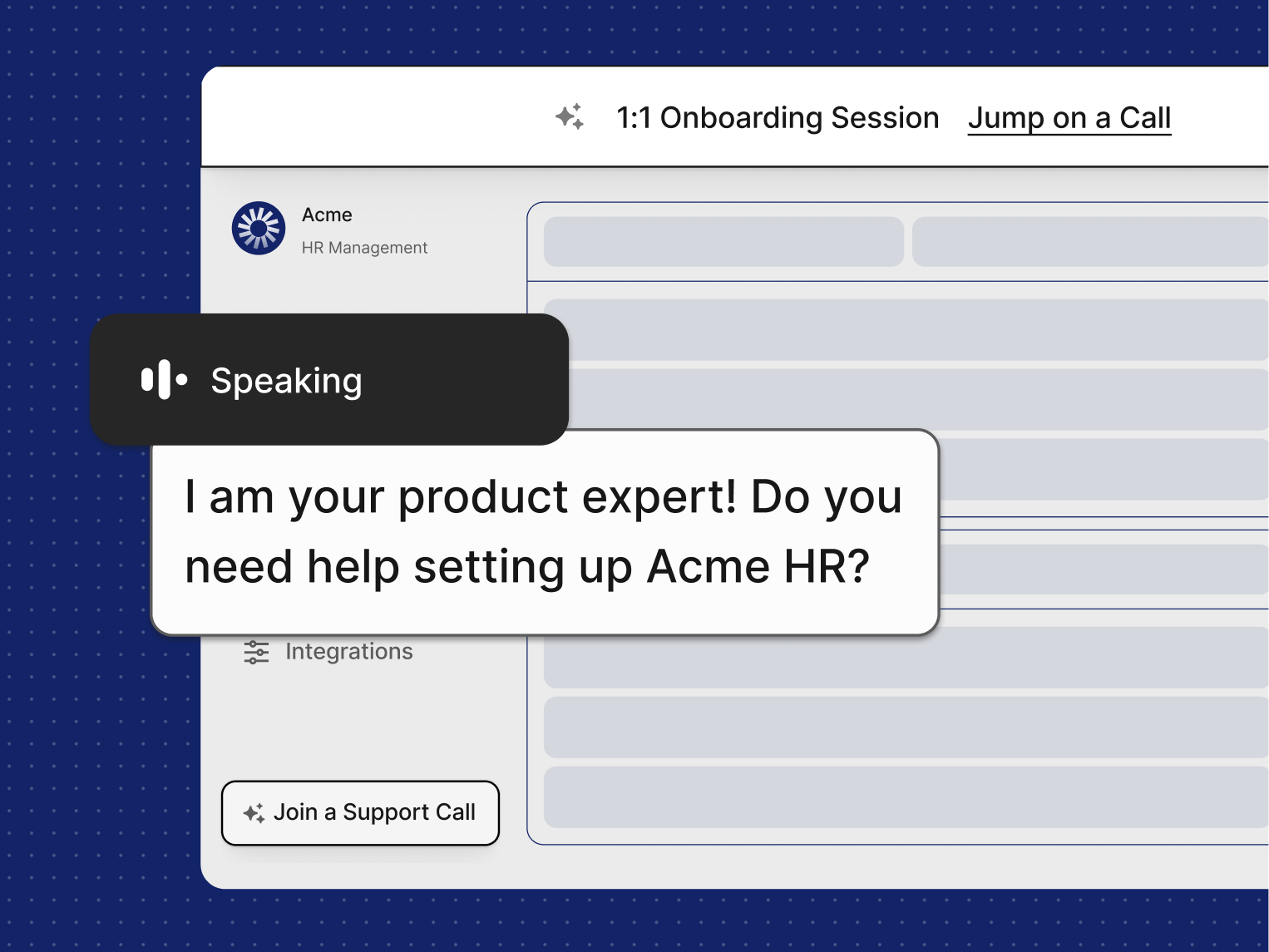
The rest of the workforce hasn't realised the potential of AI because AI doesn't work for them. They've been bypassed because the interface doesn't. Most people work by talking, showing each other things, asking follow-up questions, collaborating in the moment, and adjusting as they go.
None of that fits cleanly into a prompt box and a wall of returned text. The interface gap is doing now what the absence of the power plug did in 1900. It's keeping a real and ready technology concentrated inside a small group of people who can afford to engineer their way around the limitation, while everyone else waits.
This is the part of the AI conversation that most companies haven't yet metabolised. The AI investment that's already been made is not waiting for the model to get better. The model is fine. What it's waiting for is the interface that lets the rest of the company's users actually use it.
The companies most exposed to this haven't named the problem yet
The position I see most often goes something like this. A company shipped AI features into its product over the last twelve to eighteen months, raised the AI investment with the board, and built a roadmap that assumed adoption would track the way previous feature releases had tracked. The capability does what it was meant to do, the demos go well, and there are happy customers. Seat activation on the AI side of the product is sitting in single digits, which is roughly where it landed in the first month and roughly where it's stayed since. Nobody is calling it a crisis because there's nothing on fire, but the AI line on the next board deck has stopped getting prouder and the CFO is starting to ask questions that don't have great answers yet.
The response so far has usually been to throw more service at the problem. Forward-deployed engineers get pulled in to integrate the AI deeper into customer workflows, in case the integration is the gap. CSMs get retrained to walk users through the AI features manually, in case the human touch is what's missing. Sometimes a consulting engagement gets signed to figure out what the team should be doing differently. All of this is expensive, well-intentioned, and structurally limited in the same way that hiring more electrical engineers in 1900 was structurally limited. It works for the customers the company can afford to staff around, at the scale the company can afford to do it, and it leaves the rest of the diffusion problem exactly where it was, because none of it changes the interface the user actually has to work with.
The cost of waiting is paid in a cohort that doesn't come back
The reason doing nothing about the interface layer is so easy to defer is that the cost of waiting doesn't show up on any of the dashboards anyone is watching. Customers who tried the AI feature once, couldn't quickly get it to do what they wanted, and went back to doing the work the way they'd always done it are not a cohort waiting patiently to be re-activated when the right tool eventually gets deployed. They've formed a view about what the AI can and can't do, and that view is going to be hard to shift later because they've already moved on. The longer the gap between when the feature shipped and when it became usable by the people it was meant for, the larger that cohort gets, and the more of the AI's potential value gets quietly written off in the user's head before anyone in the building realises it's happening.
The activation rate doesn't decline. It just never improves. The revenue that would have shown up if the AI had actually reached people doesn't appear on any line item, because finance can't see what was never realised. The cost surfaces indirectly, often later than the team would have liked, in the form of expansion that didn't materialise, renewals that became defensive conversations, or board narratives about the AI investment that started cracking around the strategy deck. By the time any of that becomes legible, the gap has been compounding for several quarters and the conversation has moved from how to fix activation to whether the AI strategy was the right one to begin with.
The choice that's actually in front of you
The companies that solved electricity didn't get there by waiting for the technology to become easier. They got there by paying for the interfaces that made it usable, sometimes earlier than the maths quite justified, because the alternative was sitting on a capability that everyone else was about to figure out how to deploy. The companies trying to solve AI right now are in exactly that position, even if the procurement decks don't frame it that way. The AI investment has already been made. What's still being deferred is the decision about whether the people who are supposed to use it are actually going to.
Deferring that decision isn't holding a position. It's quietly choosing a year in which the AI sits where it currently sits, the cohort of users who've already decided about it keeps growing, and the gap between the company and whoever figures out the interface first widens. The cost of that year doesn't appear on a dashboard until much later, and by the time it does, the conversation has stopped being about activation and started being about whether the AI strategy was right to begin with. That's the conversation worth avoiding, and it gets avoided by making the interface call sooner rather than later.