How to Reduce Churn


Introduction
Most teams treat churn as something that happens at the end of a customer's life. Churn happens at the start.
The decision a customer makes in week nine to leave at month twelve was usually formed inside the first two weeks, when they were trying to figure out what your product did for them and didn't get there.
Everything that follows is timing. The retention machinery that gets built downstream is fighting a fire that started in week one.
This guide is about how to reduce churn by addressing the cause rather than the symptom. Solving activation is cheaper than solving churn, it's upstream of every retention tactic, and the teams that get this right have stopped running their churn programme and their activation programme as separate things.
Why most churn reduction advice misses the point
Search "how to reduce churn" and the same advice comes up. Customer health scores, proactive check-ins, loyalty tiers, executive sponsors, QBRs. None of it is bad, but all of it is downstream.
These are tactics for improving the odds of a customer who is already on the fence. By the time they're on the fence, the activation that would have kept them off the fence didn't happen. The CSM is doing the most expensive version of customer success, which is recovery, on a customer the product should have activated cheaply months earlier.
The trap is treating churn as its own problem. If you try to solve churn at the end of the lifecycle, you can't move the number, because the cause isn't where you're looking. Customers don't leave because your renewal motion is weak. They leave because their first two weeks didn't give them enough reason to stay.
Solving activation is cheaper than solving churn. The work happens once, in the window when the customer is still motivated to learn the product, and it produces a customer who doesn't need rescuing twelve months later. Recovery, by contrast, costs more per dollar of revenue saved than almost any other CS motion, and most of the time it doesn't actually save the account.
The real cost of poor activation
There are three signals. If two of them match your data, you're looking at an activation problem in churn clothing.
- Time-to-churn is concentrated in the first 90 days. Pull your churn cohort by tenure. If a disproportionate share of churned customers left inside the first quarter, they never activated. A customer who stayed nine months and then left made a different kind of decision, probably strategic or budget. A customer who lapsed in week six was never going to stay.
- Churned customers used fewer features than retained ones. Compare feature usage between your retained and churned cohorts. If churned users touched two or three features against six or seven for retained users, they were never activated against the full product. They churned against a small slice of what they bought, which is the same as saying they never bought it in the first place.
- At-risk accounts are silent, not noisy. The accounts most health systems flag at-risk are the ones who stopped engaging, not the ones who complained. Silent customers churn. Noisy customers renew. If your at-risk list is dominated by accounts you haven't heard from, the issue was activation, not service.
The pattern those three signals describe is what an unactivated customer base looks like at six months. Healthy customers reach a defined value moment in the first one to two weeks, use three or more core features in their first month, and bring a second team member in. The ones who will churn look different from week one. They hit one feature, stop, come back briefly, then fade.
The activation-first churn reduction playbook
Four steps. The order matters because each one builds on the previous.
1. Define the activation moment that predicts retention
Every product has one. A specific, observable action that separates customers who stay from customers who leave. For a CRM, it might be "logs a deal that progresses through two stages." For an analytics tool, "builds a dashboard a second user opens." For a marketing platform, "sends a campaign that generates measurable pipeline."
Find yours by comparing retained cohorts to churned cohorts. What did the stayers do in the first seven days that the leavers didn't? That's your activation moment. Build everything downstream around reaching it.
2. Measure activation rate, not onboarding completion
Onboarding completion tells you the user finished the tour. Activation rate tells you they reached the value. Those are different numbers, and the gap between them is where your churn is hiding.
Track the percentage of new users who reach your activation moment inside a seven-day window. The industry benchmark for human-led onboarding sits at around 37.5%, which is also where most reactive activation tools cap out. If your number is below 45%, no retention tactic will close the gap.
3. Replace reactive guidance with proactive guidance
Tooltips wait for clicks. Checklists wait for completion. In-app walkthroughs wait for the user to find the right page. Reactive guidance only helps users who already know what they're looking for, and the users most at risk of churning are the ones who don't.
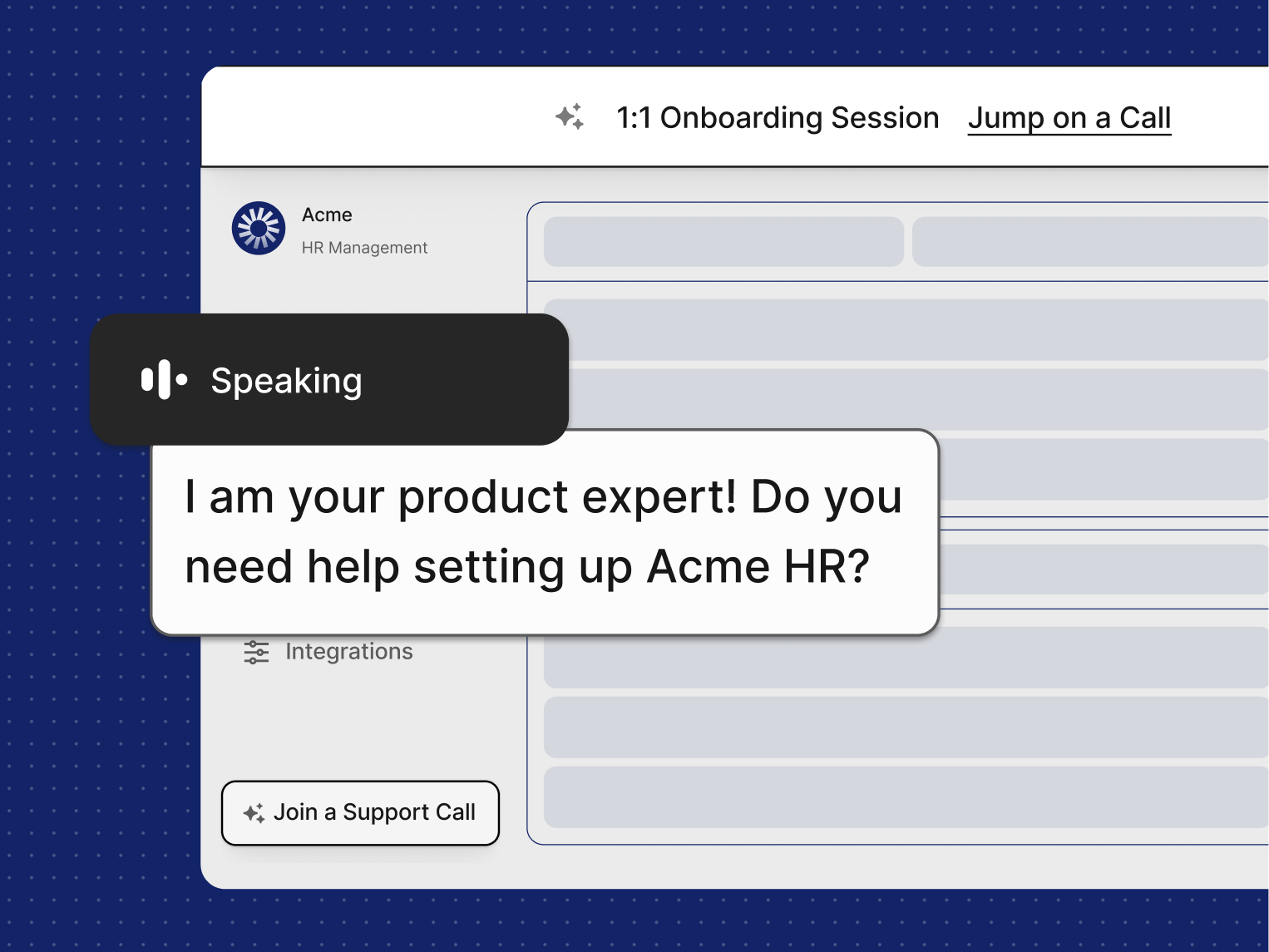
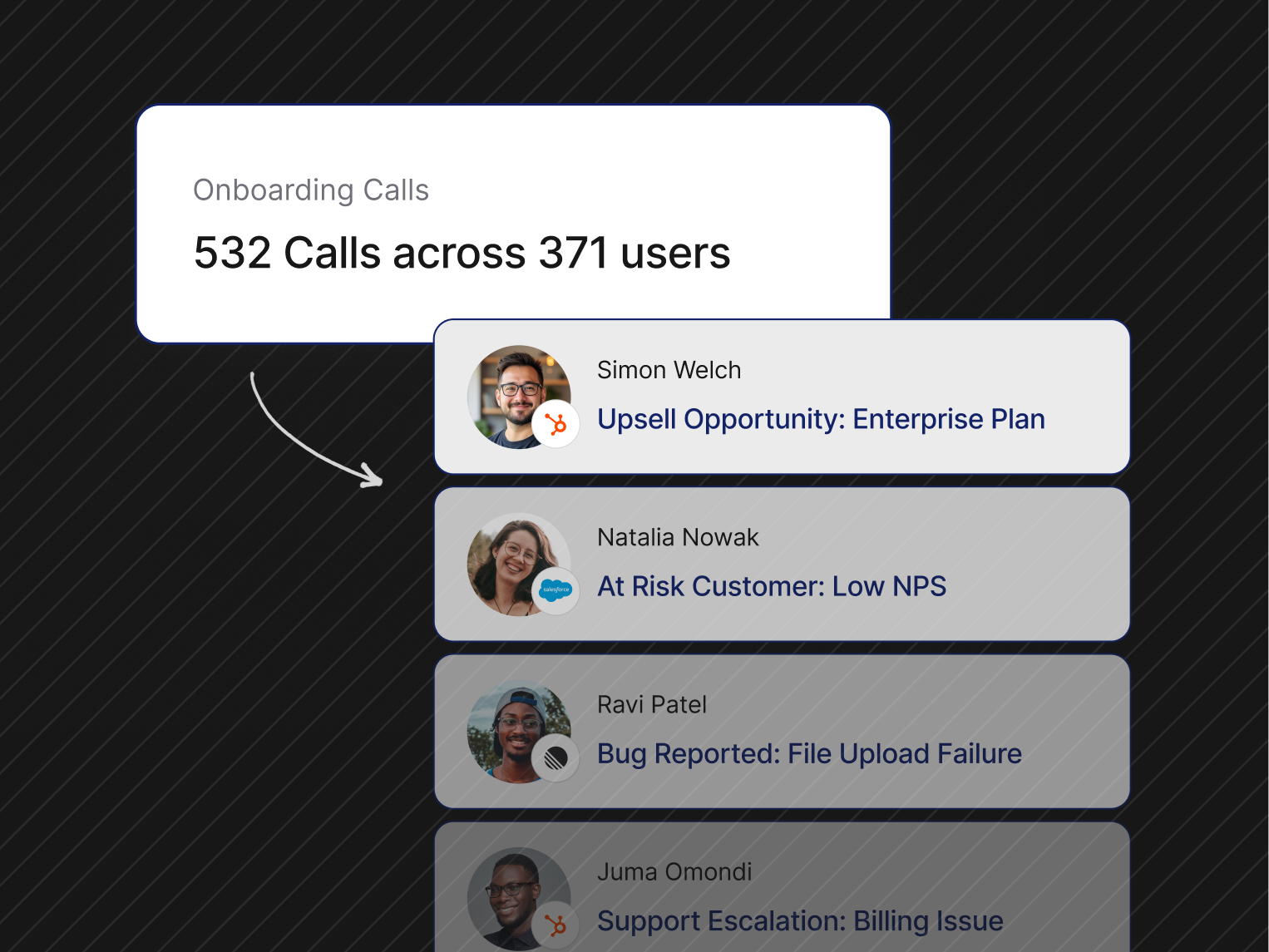
Proactive guidance surfaces the right next step based on what the user is actually doing, mapped to the specific business problem they're trying to solve.
4. Close the loop between activation data and retention action
Most teams treat activation data and retention data as separate problems for separate teams. That's the structural mistake.
Activation data is retention data, earlier. A user who doesn't reach their activation moment in the first two weeks is a churn risk by week three, whether or not the retention dashboard has caught up to that yet. Route activation signals directly into CS workflows rather than into a product analytics stack the retention team never opens. The point isn't more dashboards. It's getting the activation team and the retention team working off the same data, on different timescales.
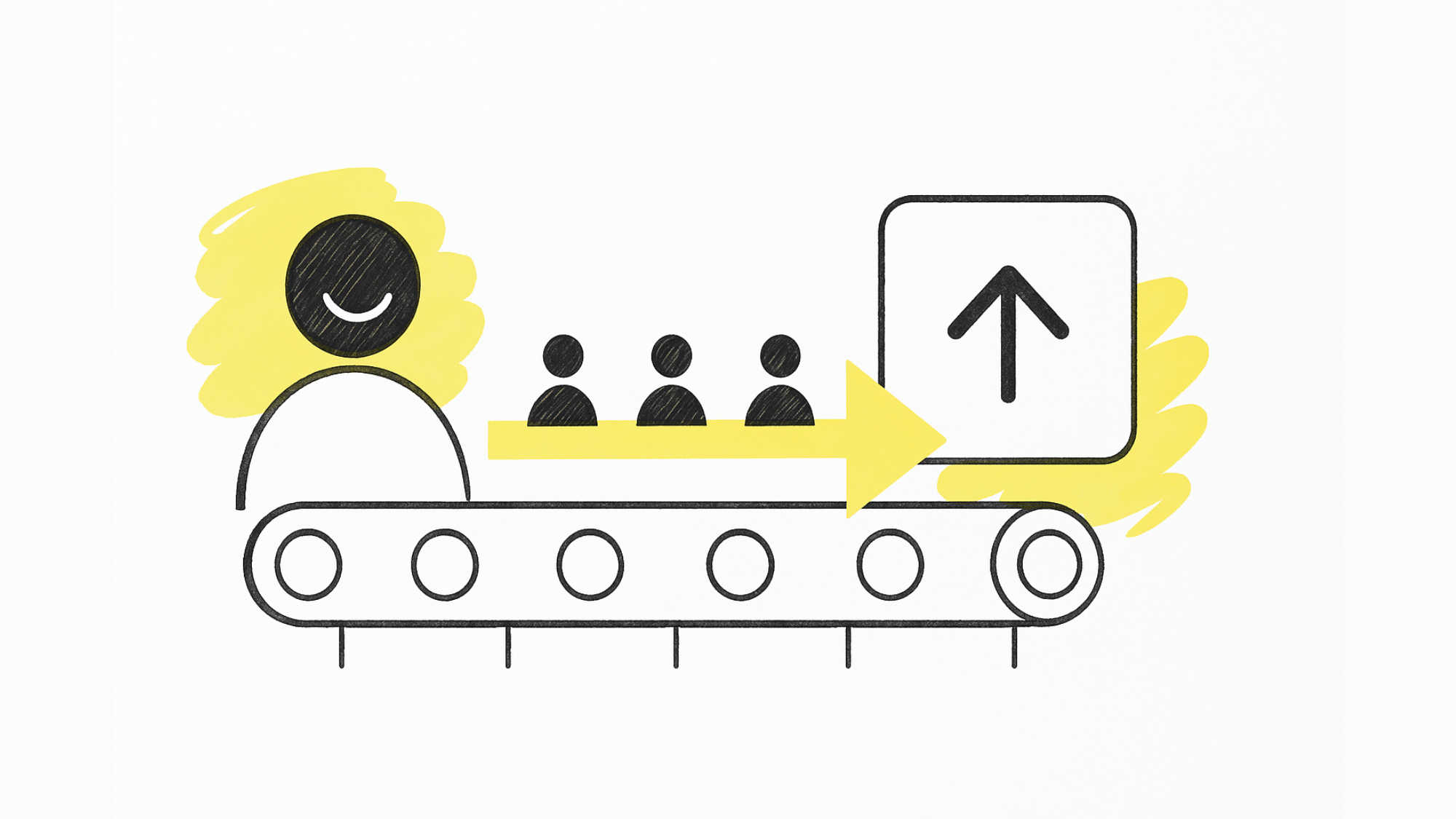
This is the positive feed-forward part of the system. Customers who activate quickly use the product more. Customers who use the product more activate more deeply. Customers who use the product more deeply are less likely to churn. The whole thing reinforces itself once the first part is working.
The metrics that actually move the number
Gross churn rate is a lagging indicator. It tells you what already happened, months after the activation step that caused it. If gross churn is your only metric, you'll always be reporting on a problem whose cause is now invisible.
Four metrics tracked together give you a system you can manage rather than a report you can read.
MetricWhat it tells youTime horizonActivation rate% of new users who reach the value moment in the target windowWeeklyTime to activationHow long it takes on average to activateWeekly90-day retention% of activated customers still active at day 90MonthlyGross churn rateThe lagging indicatorQuarterly
Activation rate leads. Time to activation qualifies the lead. 90-day retention confirms it. Gross churn is what you report to the board once the other three have already told you what's coming.
Common churn reduction tactics that don't work
- Health scores built on engagement, not activation. Most health scoring systems weight login frequency, feature usage, and ticket volume. A user who never activated will log in occasionally, use one feature, file no tickets, and score as healthy until they don't renew. Activation-weighted health scores predict retention better because they measure whether the customer ever experienced value, not whether they're still showing up.
- CSM check-ins for unactivated users. If a customer didn't activate in the first two weeks, a month-four check-in call is too late. The CSM is arriving at the funeral. Activation-first churn reduction routes CSM time to the customers most likely to reach value, not the ones furthest from it.
- Renewal campaigns highlighting features the customer never used. The renewal email that leads with "here's everything in your plan" assumes the customer knows what's on offer. For an unactivated customer, the email is announcing features they never discovered and won't suddenly adopt in the 30 days before their contract ends.
- In-app tooltips for complex products. Tooltips work when the user knows what they're looking for. They fail when the user doesn't. For any product above moderate complexity, tooltips are a cosmetic fix for a structural problem.
Key takeaway
Most churn isn't a retention problem, it's an activation problem that shows up later. The fastest way to reduce churn is to stop trying to save customers who were never activated in the first place, and start fixing the weeks where the decision to churn actually gets made.
Conclusion
The teams reducing churn at scale aren't running a better retention programme. They're running an activation programme that makes the retention programme smaller. The customers who would have shown up on the at-risk list never get there because they activated in the first two weeks. The CSMs who would have been spending their time on save plays are spending it on expansion instead.
That's what an activation-first approach actually changes. Not the renewal motion. The fact that the renewal motion has fewer hard cases to work through.
Next step: Book a demo and we'll show you what proactive activation looks like in your product, and what it does to your churn numbers.